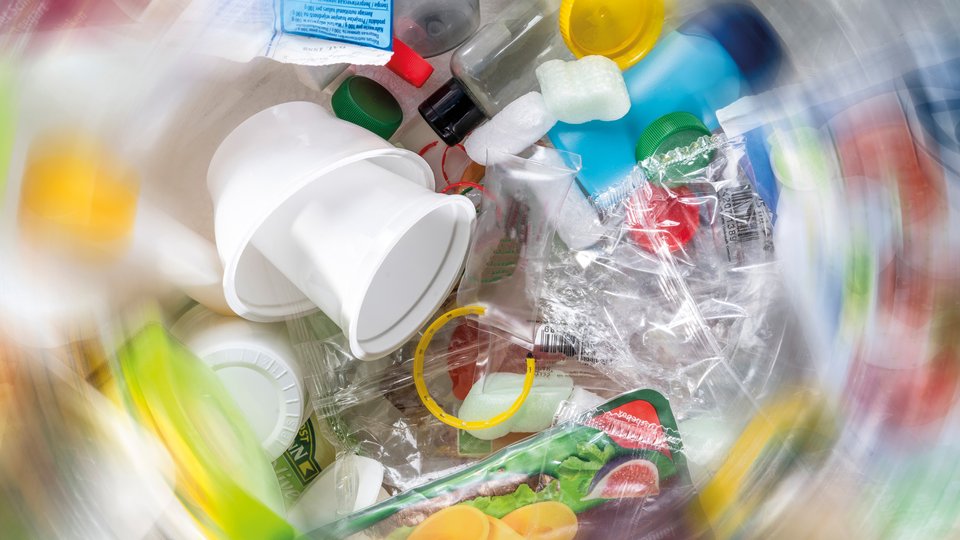
A mix of recycling technologies is required to ensure that a broad variety of plastics can be recycled, according to BASF researchers. Unlike high-volume commodity plastics, such as the polyolefins used in packaging, specialty plastics often need recycling technologies tailored to their specific properties and applications. This applies, for example, to compounded polyolefins, polyurethanes and polyamides. These materials are designed for demanding uses, including automotive applications, where standard plastics often do not provide the required performance. The topic is addressed in a recent article by BASF researchers in the U.S. academic journal Accounts of Materials Research. Achieving circularity for plastics from heterogeneous waste streams requires scalable sorting processes and the right mix of recycling technologies. The suitable approach depends both on the material itself and on the composition of the waste stream.
"There is not one single standard technology for recycling engineering plastics," emphasized lead author Dr. Bernhard von Vacano, head of the Plastics Circularity Research Program at BASF. "Instead, it is crucial to have an intelligent mix of various complementary technologies adapted to particular plastic waste streams. The aim is to produce high-quality recycled materials and achieve a closed loop for engineering plastics."
Various paths for plastic recycling
The most common technology is mechanical recycling, in which plastics are sorted, crushed and melted. This process is energy-efficient, but it does not work with all plastic types and requires clean and homogenous waste streams. Mechanical recycling is particularly well suited for packaging waste materials with large volumes of relatively pure polymers and limited amounts of additives. Nevertheless, quality and hygiene requirements can restrict the use of mechanically recycled materials in new packaging products.
There are limits to mechanical recycling for plastics used in technically demanding applications, as suitable waste streams are often scarce and plastic products frequently contain complex polymer compositions. In contrast, solvent-based recycling is suitable for more complex plastic waste. In this process, a solvent is used to selectively dissolve, separate and clean one type of plastic. For example, polyamides can be recovered from scrap vehicles and used again in the manufacturing of new components.
Another important recycling technology is depolymerization. In this process, plastics are broken down into their building blocks and put back together again. BASF researchers have developed loopamid, a process that enables circular textile-to-textile recycling of polyamide 6. Waste textiles can therefore be transformed back into polyamide fibers with the same quality standards as conventional polyamide 6. In early 2025, BASF started up its first commercial loopamid production facility at its Caojing site in Shanghai, China.
Plastics from very heterogeneous waste streams, which often end up in incineration plants, can be recycled in thermochemical processes such as pyrolysis or gasification. These technologies require a lot of energy. In pyrolysis, the long-chain polymers of plastics are broken down into short hydrocarbon chains, which can then be used again as a raw material, pyrolysis oil. Gasification produces syngas, which can be deployed as a chemical feedstock in production.
Regulatory frameworks as a condition for scale-up
Numerous BASF pilot projects have demonstrated that many recycling processes for polyurethanes and polyamides are technically feasible and can convert plastic waste back into virgin-quality feedstock. "However, two key conditions must be met before these technologies can be deployed at scale and to enable business cases for large scale investments. First, we need effective waste management systems that keep plastics in the loop over the long term. Second, policymakers need to provide clear and reliable regulatory frameworks that support recycling," said Dr. Jens Hamprecht, co-author of the publication and Vice President in BASF’s Performance Materials division.
As an important pillar of the transformation towards a sustainable economy, recycling keeps materials circulating, reduces dependencies on fossil raw materials and conserves resources. A clear and predictable regulatory policy framework can help position Germany and Europe as leading hubs for innovation, supporting technological progress and sustainable growth in the chemical and manufacturing industries. BASF states that this is why it conducts research along the entire value chain to systematically improve recycling processes and close material loops.