EREMA Group sees long-term growth in plastics recycling
EREMA Group reports a profit for financial year 2025/26 despite lower revenue and difficult market conditions. The company points to rising global plastics demand and the need for high-performance recycling technologies as long-term growth drivers.
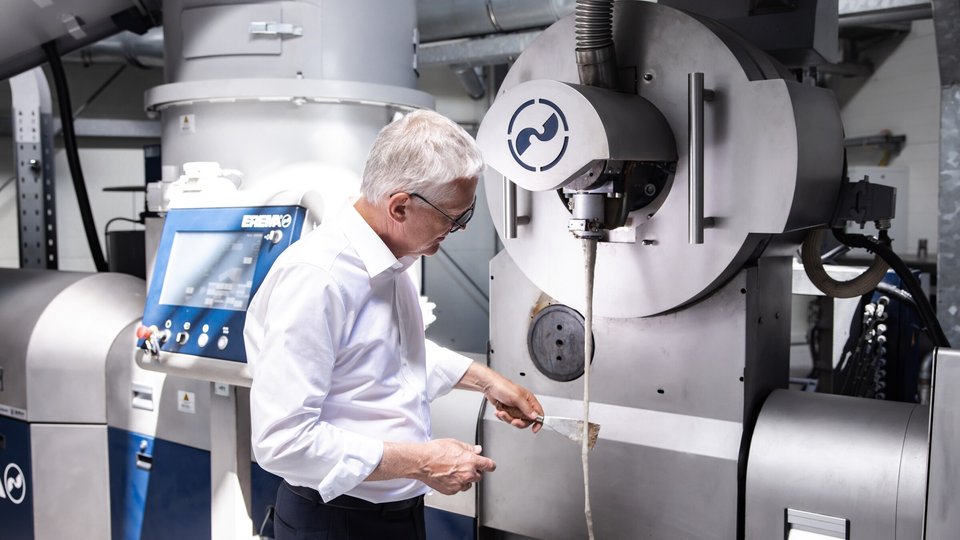
EREMA Group remains focused on the continued development of recycling technologies and on production in Austria, despite difficult conditions in the plastics recycling market. Since 1983, the Group has sold around 9,200 systems and components with an annual global capacity for recycling more than 26 million tonnes of plastic waste. In the 2025/26 financial year, the company posted a positive result, while continuing to invest in research and development to support higher recyclate content in plastic products. According to the Group’s management, fast growth in global plastics demand is expected to increase the need for high-performance recycling technologies. Recycled plastic is also gaining importance internationally as a secondary raw material.
Profit despite lower revenue
For the third consecutive year, the plastics recycling market has been under considerable pressure. Companies in the sector are facing high energy costs, weak demand for recyclates and strong international competition. According to Manfred Hackl, CEO of EREMA Group, these challenges are felt particularly by businesses based in Europe: "In Europe we have created a cost structure that puts industrial companies at an increasing disadvantage in the international marketplace."
EREMA Group was also affected by current market trends. In the past financial year, which ended at the end of March, the recycling technology specialist generated revenue of EUR 235 million, down 28 percent compared with the previous year. "Many customers are postponing their investments," says Horst Wolfsgruber, CFO of EREMA Group. "We feel the effects of that straight away. That the EREMA Group was able to close the past financial year with a profit in these challenging market conditions fills me with pride and gratitude. We achieved it thanks to our structure as a stable, family-owned business, to keeping a tight rein on costs and to the dedication of our employees."
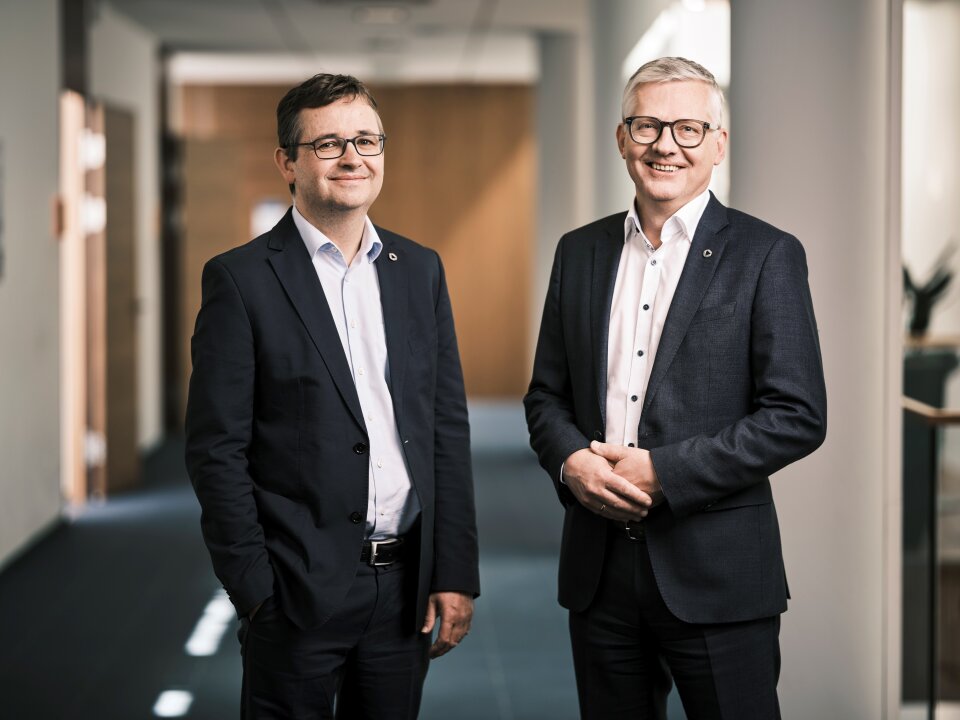
Manfred Hackl (CEO) and Horst Wolfsgruber (CFO) are leading the EREMA Group through a period of challenging market conditions. Although investment in the plastics recycling sector has fallen, the family-owned business posted a profit for financial year 2025/26.
Global plastics demand is rising
Because EREMA Group operates internationally, it can partly compensate for weaker demand in Europe with orders from other regions. Europe nevertheless remains the company’s largest market. "This is the traditional home of recycling," explains Manfred Hackl. Other regions are also developing: "Asia is making great strides and America is also gaining ground, chiefly with the recycling of production waste. Africa is some way behind in fourth place, but it is here that we will see the sharpest rise in the demand for plastic, and therefore for recycling solutions, in the coming years."
According to the OECD, global demand for plastic will triple from 460 million tonnes in 2019 to 1.2 billion tonnes in 2060. Meeting a larger share of this demand with recyclates will require expansion of recycling infrastructure and investment in high-performance recycling technology. The OECD currently estimates that only 17 percent of plastics will be recycled in 2060.
Technology and process integration
"Contrary to what is often believed, plastics recycling already works amazingly well for many applications," Hackl says. "The key question for the future is how we can keep more, and more demanding, material flows in the loop while constantly maintaining high quality."
When input materials vary significantly, robust systems are required. Filtration, degassing and detailed process knowledge are central in this area. Hackl says these are among EREMA Group’s core strengths: "Our recycling systems’ excellent decontamination performance guarantees the quality while their robustness ensures a consistent output. In addition, energy-efficient solutions keep our customers’ operating costs to a minimum."
A functioning circular economy requires compatibility between material design, collection, sorting, washing and extrusion, followed by the use of recyclate in new products of equal quality. Through the engineering partnership between EREMA and Lindner Washtech, customers receive an integrated solution from secondary feedstock to the resulting recyclate. According to the company, close alignment of the processes improves the quality, throughput and cost efficiency of the overall system.
EREMA Group is also starting to focus on new business areas. In October 2025, the company made an investment in BlockTexx. The Australian company has developed a process for extracting polyester and cellulose from blended fabrics, an important step toward textile recycling. The PET fibre industry is three times as large as the PET bottle industry. At present, only around one percent of polyester is recycled.
Recycling in raw materials strategy
To increase the role of recycling in meeting future plastics demand, reliable rules are required to enable investment. Regulations such as those for packaging under the PPWR and end-of-life vehicles under the ELV framework in the European Union are important milestones. "The most important thing, however, is that the rules are clear, reliable and implemented consistently all over Europe," says Hackl. "If they are not implemented consistently, no one will invest. We need a standardised system to make recyclates more attractive. Only then will recycling be able to establish itself as part of a long-term raw materials strategy."
Important growth regions such as China and India are also beginning to recognise the importance of the circular economy for raw material supply and competitiveness. Both countries are expanding their recycling industries with their own regulations and initiatives. EREMA Group has been active in these markets for around three decades. The company established a facility in Shanghai in 2001 and opened EREMA India together with Lindner Washtech in February 2026. It also has sites in North America, South Africa and Thailand.
With its international presence and ongoing investments, EREMA Group expects to benefit from this growth. "For us, plastics recycling has always been, and remains, an emerging market," Hackl stresses. "The EREMA Group’s solutions play a crucial role in enabling more sustainable use of plastic and keeping raw materials in the loop."
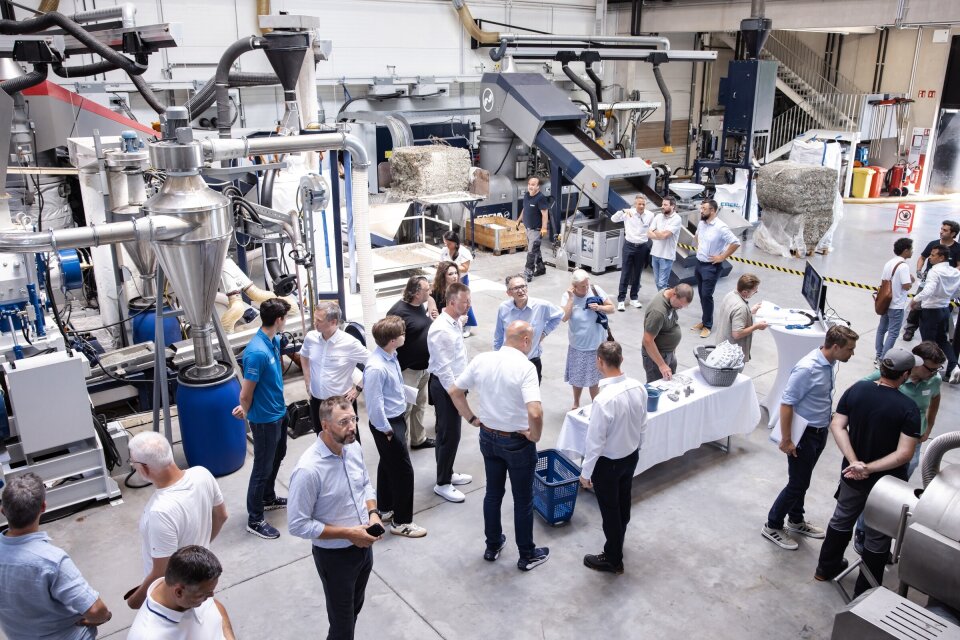
The EREMA Group regularly invites international guests to its headquarters in Ansfelden/Linz, Austria, to demonstrate new solutions for plastics recycling and pass on practical expertise.
Read more: