SKZ and ZBT develop welding process for bipolar plates
SKZ and ZBT have launched the SCoPE research project to develop a single-stage welding process for bipolar plates made from highly filled polymer compounds. The project targets a cost-effective manufacturing route for fuel cell components, particularly for SMEs.
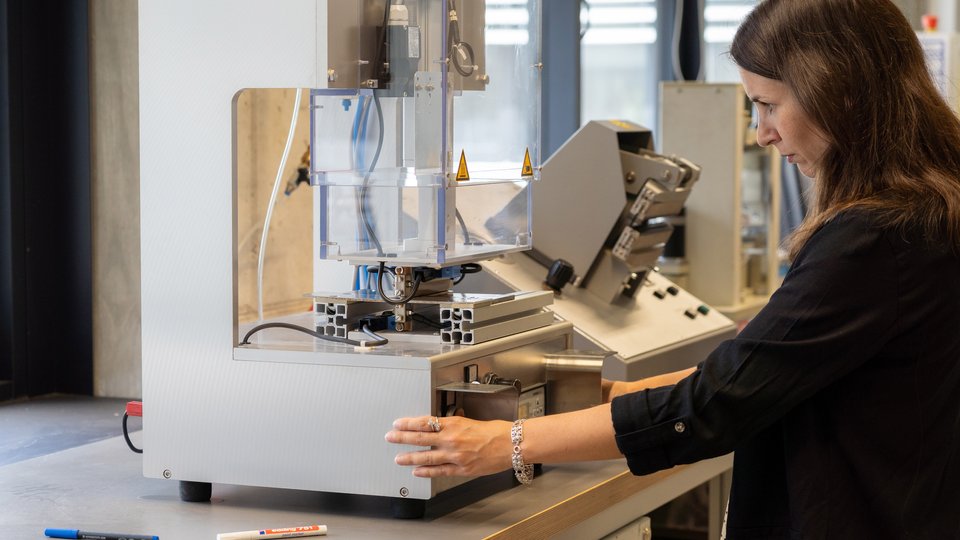
The SKZ Plastics Center and ZBT, Center for Fuel Cell Technology GmbH, have launched the SCoPE research project to develop a single-stage welding process for bipolar plates. The objective is to create a cost-effective and efficient manufacturing solution, particularly for small and medium-sized enterprises. Bipolar plates have a significant influence on the cost, weight and power density of fuel cells. In the project, bipolar half-plates made from highly filled polymer compounds are to be manufactured by film extrusion and subsequently embossed. These thin-walled components, with wall thicknesses below 0.5 mm, are then to be joined into functional, fluid-tight bipolar plates using a welding process developed during the course of the project.
Joining without filler materials
A central part of SCoPE is the development and evaluation of a fast, single-step joining process that does not require filler materials such as adhesives. The project will use existing technologies including thermal contact welding, thermal pulse welding and ultrasonic welding. The welding process with the highest application potential will be identified, and its process parameters will be optimized for the specific requirements of highly filled materials.
The work is focused in particular on the challenges associated with high filler contents, including carbon black and graphite. The project aims to significantly improve the mechanical and chemical stability of the joints, as well as electrical and thermal conductivity at the joint locations. The developed approaches are also to be validated using an industry-relevant demonstrator.
"With SCoPE, we aim to develop a robust and cost-effective joining process that makes it easier for SMEs in particular to enter the mass production of bipolar plates," explains Dr. Lisa Stiegler, Senior Scientist at SKZ in the Thermal Joining Group. "In doing so, we want to lay the foundation for broader industrial implementation of fuel cell technology."
Contribution to hydrogen technology
In addition to SKZ’s joining expertise, ZBT is contributing its expertise in compound development, extrusion and stack testing to the project. A project committee comprising companies across the entire value chain is providing additional support for the development.
SCoPE is intended to lay groundwork for the further development of hydrogen technology and for opening up new market potential for plastics processing and mechanical engineering.