Röhm is investing in the development of chemical recycling of methyl methacrylate (MMA) at its Worms site. For the first time on an industrial scale, the company is using an internally developed technology there that enables the processing and upgrading of chemically recycled MMA. The feedstock is polymethyl methacrylate (PMMA), which is converted back into high-quality MMA through depolymerization.
PMMA is a material with a wide range of applications, used among others in vehicle taillights, medical devices and many other products. Due to its chemical structure, this material is particularly suitable for efficient, high-quality recycling processes, where depolymerization can achieve yields exceeding 90 percent. Röhm's new technology can be easily integrated into the existing MMA production plant in Worms, which limits the need for additional infrastructure changes and enables a gradual increase in the share of recycled feedstock in production.
With this investment, the company is creating the basis for a closed and scalable material loop for PMMA. From summer 2027 onwards, recycled MMA is to be used for manufacturing products from the proTerra portfolio across Röhm's Verbund structure. Integrating recycled MMA into existing raw material streams is intended to enable the production of materials with properties equivalent to virgin feedstock, while reducing the use of fossil resources.
Role of the European Recycling Alliance for PMMA
Scaling the technology up to industrial level is Röhm's contribution to the European Recycling Alliance for PMMA. This alliance was established at the end of 2024 together with industry partners. The aim of this network of companies is to significantly increase the recycling rate of end-of-life PMMA across Europe and to establish a fully closed material loop for this polymer.
The alliance partners are responsible for different stages of the value chain. Pekutherm collects and sorts around 5,000 tons of PMMA waste per year across Europe. MyRemono processes these quantities into technical rMMA by means of depolymerization. At Röhm's Worms site, this technical rMMA is then upgraded to MMA with quality equivalent to virgin material. This creates a continuous process chain that covers collection, chemical recycling and reintroduction of the monomer into polymer production.
Lukas Dössel, director circular economy at Röhm, points to the importance of this solution for the PMMA value chain: "With rMMA, we are creating a real cycle in the PMMA value chain. This way, we can support our customers in meeting future legal requirements. This is a decisive step towards sustainable material flows in Europe and a reduced dependence on fossil raw materials."
Public support and environmental effects
Röhm's investment is co-financed and supported by the German Federal Ministry for Economic Affairs and Energy. The funding program aims to help industrial companies in Germany reduce energy consumption, use resources efficiently and cut emissions. The project in Worms is in line with these objectives by increasing the share of secondary raw materials in production and developing processes with high material efficiency.
Integrating recycled MMA into the proTerra product portfolio is intended to enable customers in various industrial sectors to use materials based on feedstock from chemical recycling without giving up existing quality requirements. Material grades prepared on the basis of rMMA can be used in applications where high purity and stable properties are required, such as automotive components or medical products, while reducing the environmental footprint compared with polymers based solely on virgin feedstock.
As Dössel emphasizes, the project also has a systemic dimension: "With this investment, we are taking responsibility for a mindful and circular use of plastics. We do not just want to be part of the change, we want to actively drive it forward." In a broader perspective, the implementation of chemical recycling of PMMA and the development of cooperation within the European Recycling Alliance for PMMA may contribute to increasing the availability of high-quality secondary raw materials for the plastics industry in Europe.

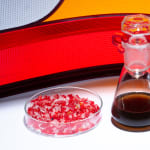
Tests with real post-consumer waste: on a pilot scale, old car taillights made of PMMA were depolymerized at MyRemono and upgraded at Röhm's Worms site to MMA in virgin material quality.