Iperal, one of Northern Italy’s fastest‑growing supermarket chains, has restructured its fresh product logistics around reusable plastic crates as part of the start‑up of its new Fresh Food Centre in Giussano (MB). The 50,000 m2 facility, equipped with fully automated handling systems and powered by 4,300 solar panels, manages fruit and vegetables and the retailer’s own “Fatto da Noi” (Made by Us) assortment. The launch of this hub became the trigger for a shift away from a long‑used mix of cardboard, plastic and wooden crates towards a standardised, automation‑ready transport and display solution.
Before the change, Iperal relied on single‑use and mixed‑material packaging to move fresh produce from suppliers to its 56 stores. This approach generated sizeable waste volumes and contributed to pallet instability in the supply chain. In addition, non‑uniform containers led to variable presentation standards at the point of sale, which did not fully support the company’s focus on quality and consistent customer experience. With a growing fresh offer and a strongly automated central facility, the retailer identified the need for packaging that could combine compatibility with automated equipment, repeatable performance and reduced environmental impact. In this context Iperal opted for a reusable packaging model based on plastic crates operated in pooling.
Standardised reusable plastic crates replace mixed packaging
Iperal selected Tosca’s Wood Look reusable plastic crates (RPCs) and bins as the core packaging medium for its fresh supply chain. The system is built around rigid plastic containers designed for repeated use, with a surface finish resembling traditional wooden displays. According to the companies, this design aims to provide the visual characteristics associated with wood while maintaining the durability, hygiene and mechanical strength of plastic. The look of the crates supports clean and orderly merchandising in the fresh departments, while the material properties are intended to protect products during transport and handling.
Through Tosca’s pooling model, the crates are not owned by the retailer but circulate in a closed loop. After use they are collected, cleaned and redeployed, allowing each unit to complete multiple trips. This service model eliminates the disposal step associated with single‑use packaging and is positioned as a circular, cost‑efficient alternative to expendable transport items. The standardisation of container format is a central element of the project; Iperal has introduced Tosca’s 60×40 and 30×40 RPCs in several height variants, complemented by larger bins that serve higher‑volume flows.
The containers move from suppliers to the Fresh Food Centre and then to the stores without repacking, enabling uniform handling at each stage. Their standard footprint and consistent build quality facilitate stacking on pallets, passage through automated systems and shelf display in the retail area. This consistent behaviour in intralogistics was a key requirement in the design of the Giussano facility, which relies on automated lines for material movement.
Commenting on the collaboration, Gian Paolo Mezzanotte, Managing Director – Italy, France, Spain at Tosca, said: "Our partnership with Iperal is a great example of how reusable packaging can unlock both operational and environmental value. By introducing a standardised, reusable system, we’ve helped simplify logistics, enhance product quality, and support Iperal’s long-term sustainability goals."
Impact on pallet stability, automation and store operations
Following the transition to the new crate system, Iperal reports a visible change in pallet stability. The uniform crate dimensions and structural rigidity have made pallet loads more stable, which in turn supports safer and more predictable handling. This is particularly relevant in the context of an automated distribution centre, where consistent load characteristics are necessary to minimise system stops and manual interventions.
The RPCs are designed to integrate with Iperal’s existing automated lines. According to the retailer, the compatibility of the crates with conveyors, stackers and other equipment has resulted in smoother flow through the facility. The reduction in variability associated with different packaging formats has helped remove bottlenecks and limit unplanned downtimes. Waste management processes have also been simplified, as the reduced reliance on single‑use materials decreases the volume of packaging to be compacted, stored and disposed of.
Describing the operational effects, Lorenzo Zecca, Supply Chain Director at Iperal, stated: "Tosca’s automation-ready RPCs fit seamlessly into our existing lines, ensuring smooth handling, consistent stacking, and reliable flow through every stage of the automated process. We’ve seen faster throughput, fewer stops on the line, and more consistent performance overall. The durability and uniformity of the RPCs have reduced disruptions, improving both efficiency and reliability across our operation and supply chains."
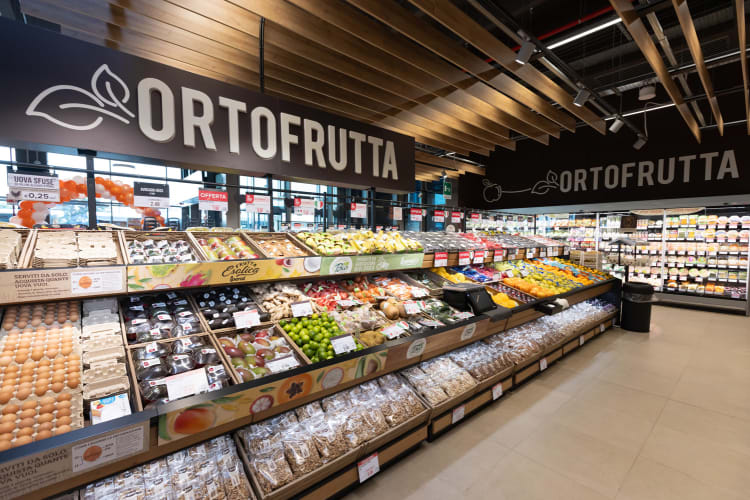
At store level, the same containers function as display units for fresh produce, contributing to a more homogeneous visual appearance across locations. Customers encounter products presented in a cleaner and more uniform way, which aligns with Iperal’s positioning on quality and service. The robust crate construction offers increased protection for fruit and vegetables during transport, which the retailer associates with lower product damage and a more consistent availability of goods on the shelves.
Contribution to sustainability targets and further development
The move towards a reusable crate pool is part of Iperal’s broader efforts to reduce the environmental impact of its operations. By substituting single‑use cardboard, plastic and wood packaging with long‑life plastic crates, the company aims to lower overall packaging waste volumes, reduce associated CO2 emissions and use resources more efficiently. Quantitative data on savings are still being compiled, but both partners highlight daily operational indicators such as reduced waste handling and smoother logistics as signs of progress.
The new Fresh Food Centre itself is conceived as a high‑efficiency node within Iperal’s network, with extensive automation and on‑site renewable energy generation from 4,300 solar panels. In this context, the compatibility of transport packaging with automated technology and repeatable handling is not only a question of cost but also of resource efficiency, as disruptions and damage can translate into extra energy use and food waste.
The positive experience with Tosca’s system has encouraged Iperal to extend the use of reusable assets beyond its initial supplier base. The retailer is in the process of onboarding additional partners, including suppliers in Spain and the Netherlands, into the crate pool. The objective is to gain further standardisation benefits across inbound flows and to scale the environmental effects of the reusable solution. In parallel, Iperal is examining possibilities to refine in‑store replenishment processes, with a focus on ergonomics and work efficiency for staff handling the crates.
The company describes the cooperation with Tosca as constructive and result‑oriented, positioning the packaging provider as a strategic partner in the evolution of its supply chain. The implementation at the Fresh Food Centre and in the store network indicates how standardised reusable transport packaging can interact with automation, logistics and merchandising to shape a more integrated and resource‑efficient fresh supply chain.