Utz ID supports traceability of returnable packaging
The Utz ID system links reusable containers and pallets with a digital product passport. The solution is intended to support traceability, environmental data reporting and companies' preparation for PPWR requirements.
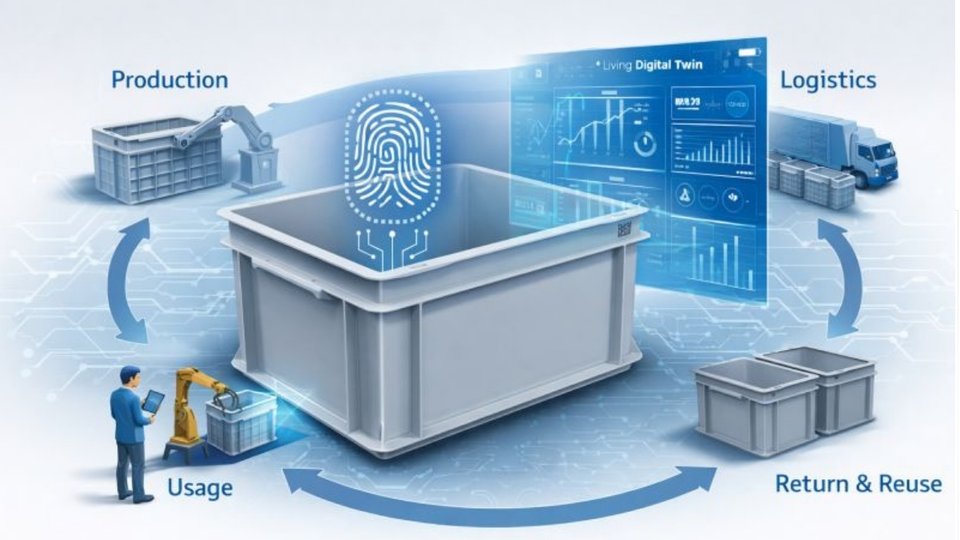
For years, companies focused primarily on designing packaging suitable for recycling. However, new regulations go much further. PPWR, the Packaging and Packaging Waste Regulation, requires not only declarations but, above all, data confirming the actual operation of packaging in a circular system. Key aspects are expected to include the number of use cycles, the content of recycled materials and the ability to track a product throughout its entire life cycle. The response to these requirements is Utz ID, a digital product passport system intended for reusable packaging. Each container receives a unique digital identity in the form of a QR code or RFID tag, linked to a digital product passport.
With this solution, companies can monitor the location of packaging, its usage history, material data and environmental parameters in real time. Each container and pallet produced by the Utz group can be assigned a unique, standard GTIN number in the form of a QR code already at the production stage. This is intended to facilitate integration with existing IT systems and enable digital identification and tracking. After scanning the QR code with a smartphone, users gain immediate access to detailed product information.
Digital passport for the container
Utz ID links the physical packaging with its digital counterpart. Each container receives its own digital product passport containing information on material origin, recyclate content, production date and usage history, carbon footprint and recycling options. The data is available after scanning the QR code or reading the RFID tag.
The greatest value of the solution is intended to be its support for the circular economy. Instead of relying on estimates, companies receive data showing how many times a given container has been used, when it should be sent for repair or recycling, and what its actual environmental impact is. This makes it possible to extend the service life of packaging, reduce raw material consumption and plan material recovery.
The benefits also apply to operational processes. Digital traceability can reduce the number of lost containers, improve the efficiency of reverse logistics and support warehouse automation. At the same time, ESG teams gain access to auditable data needed to report compliance with PPWR requirements.
Data for the circular economy and PPWR
This approach opens up new possibilities for managing reusable packaging. Companies can track the flow of resources, analyse the number of use cycles and identify points where losses occur. From the perspective of the circular economy, this means more efficient use of existing resources, lower consumption of new raw materials and a reduction in waste volumes.
Digital product passports are also becoming one of the tools supporting compliance with PPWR. The regulations will require a shift from declarations to evidence. Data generated by Utz ID is intended to enable reporting on reuse indicators, the share of recycled materials and parameters related to the product life cycle. Users will be able to create or extend the scope of tracked data themselves, which allows organisations to prepare for future audits and reporting requirements.
Utz ID is not only a reporting tool. The solution is also intended to support logistics and automation. Digitally identifiable containers can work with modern warehouse systems, robots and data-driven solutions. Each scan updates the packaging history, building a picture of its life cycle.
The future of reusable packaging is not limited to durable design. Data that makes it possible to prove circularity and meet more stringent regulatory requirements is becoming increasingly important. Utz ID turns traditional containers into digitally identifiable elements of a sustainable supply chain.
Read more: