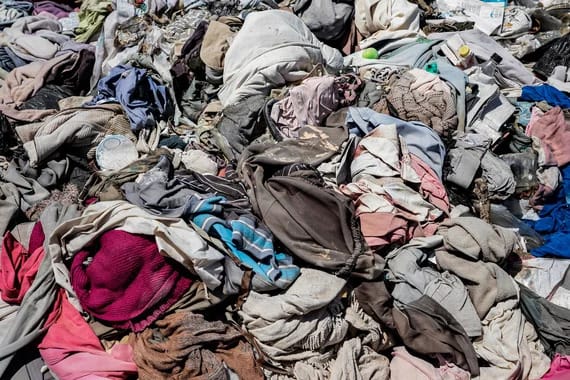
From 2025, EU member states will be required to collect used clothing and textiles separately instead of sending them to the mixed waste stream. The aim of the new regulations is to build a well-functioning circular economy in the textile sector and to increase producer responsibility for products placed on the market. The obligation to separately collect used textiles forces the development of well-designed collection and recycling systems, and thus increases the demand for efficient shredding and processing technologies that enable textiles to be integrated into material and energy recycling streams. Among the available solutions, Untha industrial shredders are an example of equipment designed for demanding applications in textile waste processing.
Currently, around seven million tons of textile waste are generated in Europe every year. Only a small fraction of this volume is reused, recycled or recovered as raw material. The new EU regulations are intended to optimize collection systems for textiles and used clothing and to support the development of recycling and recovery processes. For well-preserved clothing, separate collection systems, second-hand shops and donations already function relatively well in many countries. Heavily soiled textiles can still be sent to the residual waste stream. However, the remaining part of the stream also needs to be managed in a materially or energetically efficient way.
The scale of textile waste generation in the European Union
The average EU resident generates around 16 kg of textiles per year, which in 2022 amounted to almost 6.94 million tons in total. So far, only around 4.6 kg per capita has been collected separately, while around 11.1 kg has ended up in residual waste. This stream is most often landfilled or used for energy recovery in thermal waste treatment plants.
One of the key problems is the high material and energy consumption of textile production, including significant water use. Improper management of textile waste leads to considerable resource losses. A more responsible approach to used clothing and end-of-life textiles is becoming an important tool for reducing the environmental impact of this sector.
Current methods of textile collection and treatment
Well-preserved, higher-quality used clothing has for many years been systematically collected, sorted and sold in second-hand stores, donated or exported to other countries. Textiles that do not meet quality requirements are sent to waste management companies.
Some materials can be recycled, but at present this is often downcycling, which results in products such as cleaning rags, upholstery fillings or insulation materials. Initial research teams are working on more advanced recycling processes that would allow more textiles to be returned to the material cycle and reduce the consumption of primary resources. However, these solutions are still at an early stage of development, among other reasons due to the high diversity and complexity of material compositions that require separate processing.
There is significant potential in the thermal energy recovery of textiles. Polyester, cotton and blended fabrics have high calorific values, which makes them suitable feedstock for the production of substitute fuels used for thermal energy generation.
Technology requirements in textile waste processing
At present, energy recovery from the textile fraction in an energy-efficient way is in many cases the most effective option for utilizing the resources it contains. To ensure optimal combustion conditions in energy generation processes, textile waste must be properly prepared, first of all by shredding.
Textiles are generally designed for durability. Cotton, blended fabrics and synthetic fibres are often difficult to shred due to their fibrous structure and tear resistance. Processing them requires equipment capable of handling different material compositions as well as additional elements such as zips, buttons and other foreign objects.
Untha XR-class single-shaft shredders are designed for such applications. These machines can shred approximately 6–10 tons of textiles per hour. The C cutting system enables efficient processing of particularly tear-resistant and elastic materials. Different perforated screen variants provide a homogeneous output size of less than 30, 50 or 100 mm, depending on the requirements for substitute fuels. The narrow cutting gap ensures precise shredding and reduces the risk of material wrapping around the moving parts of the machine. In this type of application, the shredder operates at speeds of up to 35 rpm, which also allows trouble-free processing of foreign objects.
For many companies, energy efficiency and low noise emissions during operation of processing lines are key factors. Untha shredders equipped with the Untha Eco Power Drive feature high energy efficiency, and the slow-running drive helps to reduce noise and dust emissions in the machine environment. XR-class models can be used for different material streams, providing operators with a high level of flexibility. Their robust design and resistance to foreign objects enable multi-shift operation and support high machine availability.
Changes in textile recycling and implications for the industry
Textile recycling is undergoing a period of intensive change driven by new regulatory requirements, ambitious environmental objectives and value creation potential. In order to manage used clothing and textiles in a more rational and sustainable way in the future and to gradually reduce the amount of waste generated, both more conscious consumer decisions and the development of new recycling processes and processing technologies are needed.
Untha shredding technology can support plant operators in improving the efficiency of refuse-derived fuel production from the textile fraction. This application contributes to long-term reductions in the volume of waste sent to landfill and enables more efficient use of the resources contained in textile waste.