On 20–21 May 2026, the 13th Interzero Environmental Conference will be held at the Grand Hotel in Łódź. The organiser announces that the event will once again become a meeting place for specialists in environmental protection, waste management, recycling and business representatives directly affected by regulatory changes in Poland and the European Union. The conference programme focuses on the practical consequences of new regulations, in particular the PPWR regulation, extended producer responsibility and packaging design for recycling. Expert presentations, four discussion panels and an evening segment are planned to enable participants to continue discussions in a less formal setting.
Scope and format of the Environmental Conference 2026
The Environmental Conference 2026 is intended as a forum for a factual discussion on the present and future of the environmental sector. Environmental consultants, lawyers, representatives of industry organisations and businesses will analyse recent legislative changes and indicate their impact on companies operating in Poland and other EU countries.
In addition to numerous presentations, four discussion panels are planned, devoted to waste management, recycling, packaging ecodesign, e-commerce and new obligations in the textiles sector. The debates will be moderated by journalist and publicist Jakub Pawłowski, known among others from the podcast “Eko bez kantów”. After the official part, side events are scheduled to facilitate exchange of experience and networking among participants.
PPWR and new packaging regulations in the spotlight
One of the main themes of the Environmental Conference 2026 will be the PPWR regulation and its impact on business activities. The organisers emphasise that for several months this legislation has been a key topic for environmental advisers, packaging producers and recycling experts. The conference is intended to give room for different stakeholders to present their perspectives, concerns and doubts related to the implementation of the new rules.
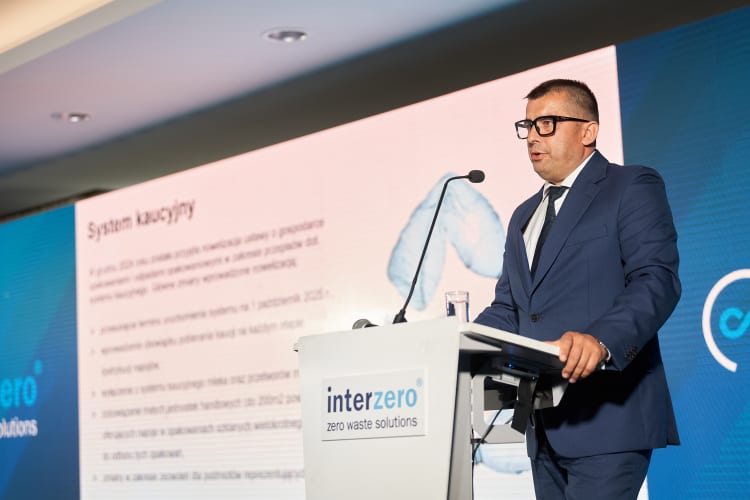
The discussion on the PPWR regulation will be opened by Paweł Lesiak, vice-president of the Interzero management board, who will present the current picture of the sector and assess the impact of recent legislative changes on entrepreneurs in Poland and throughout the EU. His presentation will be complemented by a speech by Paweł Sosnowski from Interzero, an environmental law expert and management board plenipotentiary for environmental matters at Interzero. The speaker will discuss the scope of the new EU packaging regulations and address the question of whether PPWR should be seen as a revolution or rather an evolution of existing legislation.
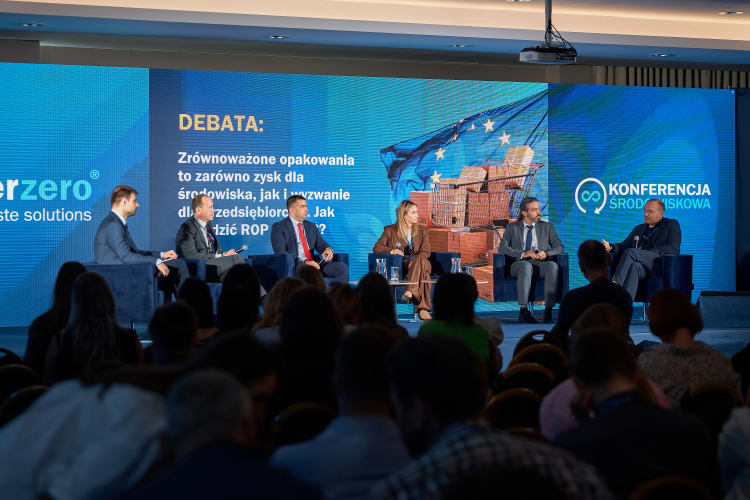
The PPWR regulation will also be the subject of one of the discussion panels on the first day of the conference. The expert debate “Waste hierarchy in practice: PPWR from the perspective of producers, processors and consumers” will feature: Patrycja Węcławowicz, attorney-at-law at Staniek&Partners, Piotr Mazurek, circular economy expert at the Lewiatan Confederation, and Paweł Lesiak representing Interzero.
Recycling and wood-based raw materials
The conference programme also covers issues related to the use of wood and wood-based materials. Representatives of Woodeco, Aleksander Majerz and Bogdan Warchoł, in their presentation “Recycling versus timber from forests – real competition or a market necessity?” will address the relationship between recycling and sourcing of wood. The conclusions of this session may be relevant for participants using wood-based materials for manufacturing and packaging, as well as for entities using wooden packaging and sending it for recycling.
Design for Recycling and packaging ecodesign
A second key area of the programme will be packaging ecodesign in the context of upcoming EU requirements. During a one-hour debate, experts will analyse whether it is possible to design an “ideal” packaging that combines required functional and logistical properties with the ability to be recycled on a large scale. The discussion is expected to provide answers on what future packaging should look like and what compromises between functionality and recyclability may be necessary.
The technological perspective on ecodesign will be presented by Manica Ulcnik-Krump, managing director at Interzero Plastic Innovations and head of R&D at Interzero Holding GmbH & Co. KG. In her presentation “Plastic packaging in the circular economy: From composition and compliance to market reality”, the expert will compare legislative requirements for plastic packaging design with actual technological capabilities and market conditions. The speech will address questions such as whether technological development keeps pace with legislative change, whether regulations can constrain innovation in the plastics sector, and whether packaging producers invest in new solutions or rather limit themselves to meeting minimum statutory requirements.
E-commerce under pressure from PPWR and EPR
An important theme of the Environmental Conference 2026 will be the impact of the growth of online trade on the packaging waste management system. The waste sector is observing an increase in the volume of shipping packaging waste, while e-commerce is experiencing dynamic sales growth. Łukasz Czarnowski, expert in EPR services in Europe and digitalisation of sales, will discuss the consequences of this phenomenon for the environment and businesses. His presentation “E-waste: how the digital and physical worlds merge in the growing waste problem” will introduce a discussion panel on green changes in e-commerce.
The debate on the impact of Polish and European environmental regulations on online trade will feature: lawyer and content creator Mateusz Ostrowski, Allegro regulation expert Anna Bojja and EPR expert in Europe Łukasz Czarnowski. The organisers announce that three main areas will be addressed: legislation and its interpretation, challenges of adapting e-commerce business models to legal requirements and solutions that enable companies to meet obligations arising from EPR and PPWR while remaining competitive on domestic and EU markets.
One of the symbols of the upcoming changes for e-commerce is the requirement to minimise all packaging, including shipping cartons. The ecodesign of cardboard packaging and technical options for reducing empty space in parcels will be discussed in detail by Jędrzej Przeździęk from Paxit.pl in his presentation “The end of shipping air? New regulations and real reduction of empty space in e-commerce parcels”.
EPR for textiles and digital product passports
The conference will also address the extension of extended producer responsibility regulations to textiles and footwear. A few weeks ago, the European Union confirmed its plans to include another product stream in this system. The organisers point out that transferring responsibility for the entire life cycle of textile products to producers alone will not be sufficient to achieve a significant environmental effect, and that a change in consumer behaviour is also needed.
During the panel “EPR for textiles – will new regulations change the attitude of producers and consumers to clothing?” these issues will be discussed by: Magdalena Fertsch-Ślęk, senior standard implementation specialist at GS1, Filip Piotrowski, circular economy expert and Baltic Sea Region Manager at Waste Free Oceans, and Monika Michalska, expert in waste processing technologies.
In addition to new obligations under EPR, textile producers must prepare for additional, significantly expanded information requirements. Textiles are among the product groups for which digital product passports (DPP) will be mandatory. The timeline for the introduction of DPP for textiles has not yet been announced; currently final work is under way on passports for selected types of batteries. Preparations for the introduction of digital passports, challenges in product marking and the need to automate the system will be presented by Magdalena Fertsch-Ślęk from GS1 in a session on DPP in practice, from regulation to interoperability.
Participation format, partnership and ticket packages
The organisers underline that the presentations and panels described are only part of the Environmental Conference 2026 programme. Interested parties can consult the full agenda and apply as partners, speakers or participants. Individuals wishing to contribute to the programme, present their own solutions or share knowledge can submit speaking proposals, while companies interested in brand exposure and cooperation with industry experts may become conference partners.
Applications and organisational enquiries, including those concerning partnership, tickets, event patronage and speaker proposals, should be sent to: konferencja@interzero.pl.
Tickets for the Environmental Conference 2026 are available on the event website. Four participation packages are offered: Basic, Normal, Silver and Gold VIP. Each participant will receive, as part of the ticket price, a two-day conference pass, a welcome pack, catering (lunch and coffee breaks), a set of conference materials, an e-certificate of attendance and a dedicated parking space. The Normal, Silver and Gold VIP packages include admission to the event after the first conference day, while the Silver and Gold VIP packages also provide unlimited access to the SPA area and accommodation in a single or double room.