The first months of the deposit system in Poland show that this mechanism is developing at a very fast pace. The number of returned containers is increasing day by day and more stores, including smaller retail outlets, are joining the system. Tomra Collection machines have accepted a total of 5 million containers since the launch of the scheme. According to the company, this is a clear signal that the system is entering its next stage of development and that the retail sector needs to adjust its infrastructure accordingly.
In October 2025, the first month of the deposit system, around 3,000 deposit-bearing containers were returned through Tomra reverse vending machines. By December this number had reached almost 1.3 million units. In the first half of January more than 3 million containers had already been collected. The vast majority, over 75 percent, were plastic bottles, while the remaining share consisted of cans. The dynamics of these changes indicate a rapid spread of both the offer of deposit-bearing beverages and the habit of returning containers among consumers.
"The data clearly show that the system has moved from the test phase to a stage of dynamic growth, and the number of containers going to collection points will increase rapidly in the near future. This is linked to greater availability of deposit-bearing beverages on store shelves," says Agnieszka Pokładek, sales director at Tomra Collection Poland.
Sharp growth in returns and store preparedness
Tomra Collection representatives emphasize that the sharp increase in returns is a clear signal for retail chains and smaller outlets to act. "In just three months we have moved from a few thousand to five million returned containers. We see the system gaining momentum week by week, and the coming weeks will bring significant increases. This is an important signal for stores that have not yet made their decision. The growing availability of deposit beverages drives increasing consumer interest in collection points and thus translates into higher return volumes," says Konrad Robak, managing director of Tomra Collection Poland.
He points out that decisions made now are crucial for the ability of stores to handle the growing number of returns in the coming months, as well as for preparing for the stabilisation phase of the system. Experience from markets where deposit systems have been in place for years shows that after a period of very dynamic growth, the number of returned containers gradually normalises and remains at a stable, high level.
Hungary as an example of a maturing deposit system
Hungary, where the deposit system has been in operation for some time, is cited as an example. After around six months of operation, weekly increases in the number of returned containers reached around 50 percent. In the 28th week of the system, more than 10 million containers were collected there, and a week later more than 17 million*. A few weeks later, return volumes were already at similar, high levels. These data highlight the need to plan technical solutions so that they are effective both during the rapid growth phase and once the system has stabilised.
In this context, it becomes crucial to select flexible and scalable solutions that can handle increased return volumes and at the same time perform well in the daily operation of a store. For the packaging and plastics processing sector this means the growing importance of infrastructure for separate collection and preparation of containers for recycling, in particular plastic bottles and metal cans.
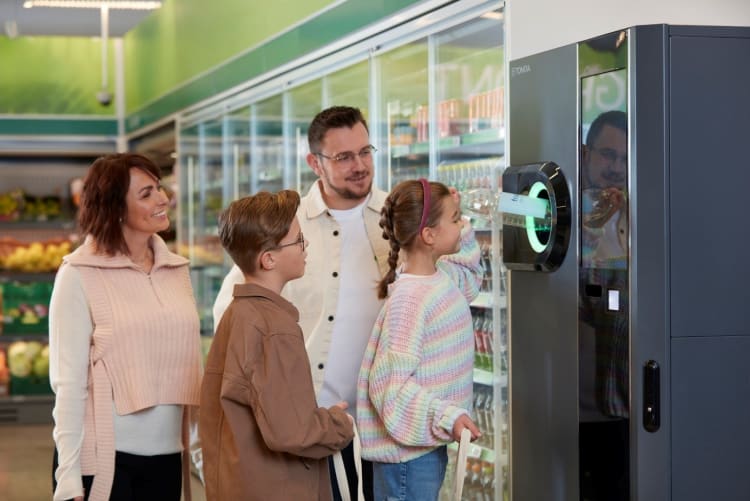
Selecting return equipment for small retailers
With the rapid increase in return volumes, proven, high-performance and stable solutions are becoming important for stores. In response to these needs many small retailers are opting for compact-format machines. "For stores, proven, high-performance solutions are becoming a priority. In response, many small retailers are choosing the Tomra B5 model, our best-seller in a compact format, combining high throughput with stable operation," says Agnieszka Pokładek from Tomra Collection.
According to the company, the service infrastructure is a key element of the operation of such machines. "Our service specialists across Poland ensure smooth operation of the equipment, supporting customers from installation through ongoing maintenance, both online and directly in the store. With such a service network in place, customers can be confident that their machines will operate reliably as the volumes of returned deposit containers increase. We are ready for this next stage," she adds.
The development of the deposit system in Poland, observed through the rapidly growing volumes processed in reverse vending machines, is an important factor influencing the plastic and metal packaging sector. The increasing number of plastic bottles and cans entering organised collection points helps build material streams with more homogeneous composition and high purity, which is crucial for efficient material recycling.
At the same time, rising capacity requirements on the retail side mean that technical solutions enabling automation of container acceptance and reduction of operating costs associated with handling returns are gaining importance. In the coming months, as deposit-bearing beverages become more widespread, high growth dynamics in the number of returned containers can be expected to continue until the stabilisation phase, as observed in more mature markets.