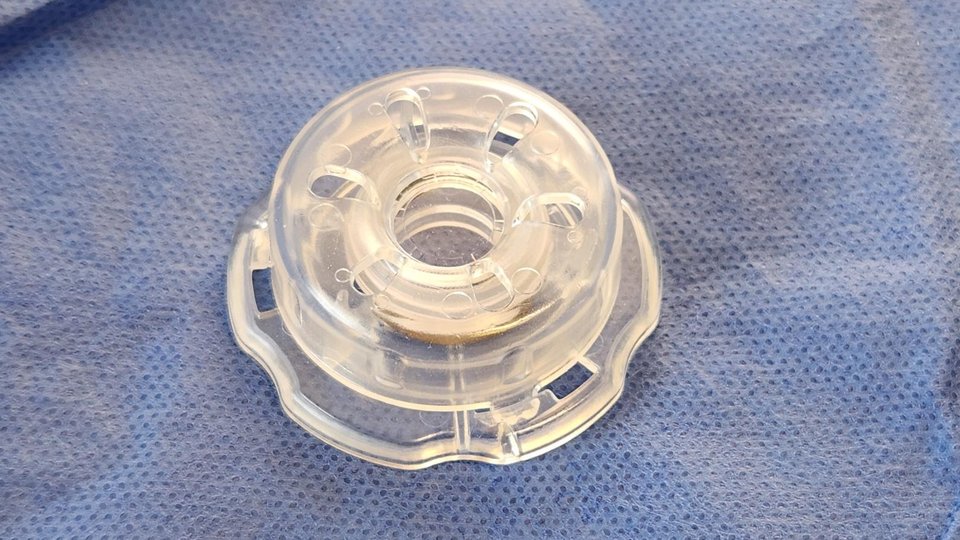
Allotex, a company developing biological ophthalmic solutions and medical devices, has entered into a collaboration with Daicel High Performance Polymers and the TOPAS Advanced Polymers unit to develop the next generation of allogeneic corneal transplantation technology. The joint project combines Allotex’s expertise in implants based on human tissue with Daicel HPP’s experience in materials science. The aim is to develop a high-performance storage and delivery system intended to support tissue integrity, product reliability and consistency of results in clinical applications.
The Allotex solution is based on the use of precisely shaped human corneal tissue, which is intended to preserve the eye’s natural structure through a tissue-additive method. According to the company, this approach is biocompatible and reversible. The company’s lead product is the Allotex TransForm Allogenic Corneal Inlay, a thin, laser-shaped disc made from sterile corneal tissue, designed for implantation under a flap created with a femtosecond laser. After implantation, the implant integrates with the patient’s cornea. According to the description, the solution is a minimally invasive alternative to procedures involving tissue removal or permanent tissue modification. The technology is targeted in particular at specific patient groups, including people in the earlier stages of lens dysfunction, with healthy eye anatomy preserved, who expect functional improvement but are cautious about procedures that permanently alter tissue or require intraocular intervention.
COC components in the storage and delivery system
An important element of the Allotex technology platform is the corneal inlay storage and delivery system, which uses precision-molded components manufactured from TOPAS COC cyclic olefin copolymer. Allotex selected this material after evaluating multiple polymer options for its storage system. Biological corneal implants must be maintained in a moist environment for up to 12 months, which requires a material capable of reliably preserving conditions inside the chamber throughout the product’s shelf life.
As indicated, several performance parameters determined the choice of TOPAS COC:
- high material purity, supporting compatibility with the biological material,
- high chemical resistance, important for stability in contact with the storage medium,
- good moisture barrier properties, limiting solvent loss over time,
- optical transparency, compatible with electron beam sterilization processes.
According to information provided by the companies, many competing polymers allow gradual moisture transmission, which can lead to solvent loss, drying and deterioration of tissue viability. In the case of COC, lower moisture permeability is intended to help maintain chamber humidity and preserve the structural and functional integrity of the allogeneic corneal graft during long-term storage.
As Evan Sherr, COO of Allotex, said: “This collaboration reflects a shared commitment to advancing a more biologically aligned approach. By combining our tissue-based platform with advanced material capabilities, we are building a system that supports both implant integrity and the needs of clinicians using this solution.”
Raghavendra Raj Maddikeri, healthcare business development manager at Daicel High Performance Polymers, stated: “At Daicel High Performance Polymers, we achieve the greatest impact when materials science helps solve complex challenges at the system level. Our collaboration with Allotex shows how the right material can help preserve sensitive biological components while also supporting performance, quality and scalability.”
Clinical development and regulatory status
Allotex operates in both the United States and Europe. The company’s biological corneal implant technologies are approved for use in the European Union, and are currently in clinical development in the United States. The company has submitted an Investigational Device Exemption application to the FDA to support clinical studies of its corneal implant platform.
The company notes that presbyopia, a condition that gradually limits the eye’s ability to focus on nearby objects, affects more than 1.8 billion people worldwide. As the population ages, the scale of this phenomenon is expected to grow. The Allotex platform is intended to address this need through a reversible, tissue-preserving solution that uses biological materials and precisely engineered delivery systems.
The collaboration between Allotex and Daicel HPP illustrates the direction of development in ophthalmic innovation, based on combining biological design, materials science and precision manufacturing.