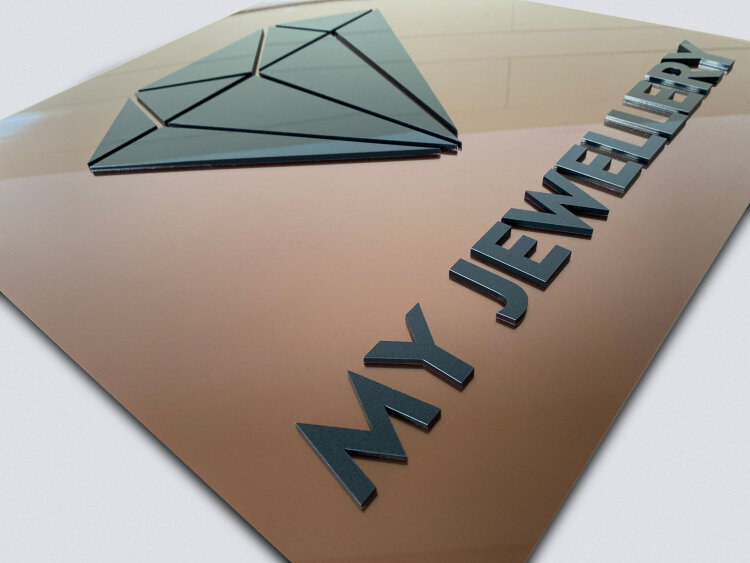
Rising material costs, stricter sustainability targets and the drive to improve process efficiency mean that a factor previously often underestimated is coming to the fore in signage production: material waste. Laser systems provide high processing precision, but efficient use of resources is increasingly determined not only by machine parameters, but also by material selection and the way the entire production process is managed. In this context, sustainability is no longer limited solely to energy consumption or logistics. Increasing importance is attached to how materials are selected, processed and optimised in order to reduce losses generated during cutting and engraving.
At the same time, digital workflows are becoming a second key factor influencing efficiency. For companies using laser technology, material selection and the integration of software with production are becoming important elements of economically viable and more sustainable operations. This applies in particular to companies producing signage, displays, branding elements and short product runs, where frequent design changes can increase the risk of material losses.
Challenges are shifting to materials and processes
In recent years, manufacturers have had to meet growing expectations from customers and regulators to demonstrate sustainable production practices. Although laser technology itself is widely regarded as precise and efficient, both the materials used and the way they are processed have a significant impact on the total amount of waste.
Traditionally, material selection was determined by appearance, cost and availability. Optimisation of production processes often played a secondary role. This can result in inefficient laser cutting, unnecessary material consumption and avoidable production errors. For this reason, many production plants are now reassessing not only their materials, but also the underlying processes, from design through to the finished product.
Materials for laser processing and production efficiency
The industry is seeing an increasingly clear shift towards materials developed specifically for laser applications. These substrates provide cleaner cuts, uniform engraving results and optimal sheet utilisation, all of which contribute to reducing material waste. They also ensure reliable results in both individual personalisation projects and large-scale serial production.
Thanks to the uniform structure of the materials, clean cut edges and repeatable engraving results can be achieved. This reduces waste, rework and material losses, especially in serial orders and complex projects. In this way, companies improve material efficiency, reduce waste and increase the cost-effectiveness of laser engraving and cutting processes.
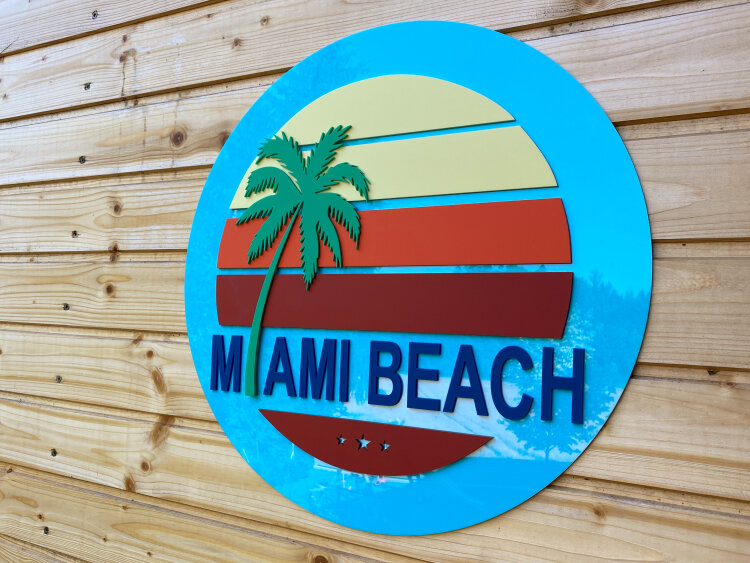
Creative signs with TroGlass
Sustainability indicators in material selection
Another important development is the introduction of more transparent sustainability indicators into material offerings. Materials that meet specific environmental criteria are increasingly labelled, allowing users to identify more responsible options at a glance.
This reduces the complexity of the material selection process and enables production teams to make informed decisions without the need for extensive analyses. In online shops, such materials are often marked with recognisable symbols, which helps companies implement sustainability principles more consistently in their day-to-day operations.
Applications and the role of software
In retail environments, where visual campaigns are frequently updated, the use of materials that minimise waste can significantly reduce the environmental footprint of short product life cycles. In interior design and customised branding, sustainable substrates provide creative freedom while remaining consistent with the values of environmentally conscious brands. Also in mass production scenarios, where efficiency is critical, optimised materials help increase productivity and reduce waste.
However, material selection alone does not fully solve this challenge. An important factor enabling further reduction of material waste is the integration of production processes supported by software. Modern laser software goes beyond machine control alone and supports users at every stage of the production process, from job preparation and material optimisation through to error-free execution. Laser software solutions such as Ruby support these activities by enabling more efficient use of materials and reducing production errors.
Features such as intelligent nesting help use material more efficiently by automatically arranging designs in a space-saving way. In addition, Vision Print & Cut functions and camera-assisted alignment functions ensure precise positioning of printed or pre-processed materials. This helps reduce incorrect cuts, rework and material losses. This process reliability enables manufacturers to achieve consistent results with lower material consumption.
By combining sustainable material selection with advanced software-based optimisation, manufacturers can move beyond incremental improvements and achieve measurable waste reduction, without compromising production flexibility, quality or speed. For manufacturers involved in signage and display production, the combination of sustainable laser processing materials and software-assisted workflow automation is becoming a decisive competitive factor. Companies can improve material and resource efficiency, reduce waste and at the same time ensure high production quality. Combining material selection with digital processes creates a basis for more economical and sustainable production, without compromising flexibility or creativity.
Sign with metallic TroGlass finish