After a period of comparatively low prices, the virgin plastics market has shifted significantly. According to the information provided, geopolitical developments are driving continuous price increases, directly affecting raw material costs for processors. As a result, previously stable cost structures are coming under pressure. At the same time, recyclates are gaining renewed relevance, both as an economic alternative and in response to regulatory requirements. Under the EU Packaging Directive, mandatory minimum recycled-content targets are to be met by 2030. At the same time, a large share of installed production lines was not designed for higher recyclate input, particularly from post-consumer streams. Increasing recyclate use typically also entails higher variability in input material quality.
In Gneuss’ view, adapting existing lines to higher recyclate shares is, in many cases, less complex than often assumed. The company points to retrofit solutions intended to enable existing extrusion lines to process both virgin material and recyclates in a stable and controlled manner, without requiring a complete system replacement.
Gneuss retrofit concepts
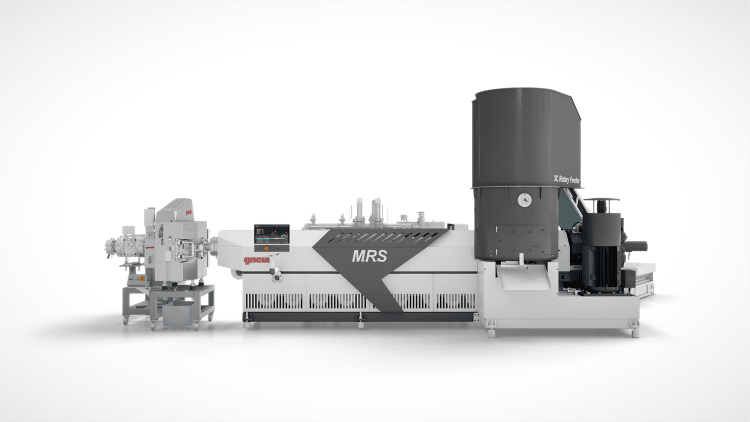
The described Gneuss retrofit concepts focus on targeted optimization of extrusion and melt filtration. Combining these process steps is intended to enable an approach referred to as Super-Clean recycling, aimed at producing high-quality polymer melt even from contaminated post-consumer material, reaching virgin-like quality levels in many applications, including food-contact uses.
Extrusion is intended to be based on a specifically engineered screw design that is meant to ensure not only efficient melting and homogenization, but also intensive degassing and melt decontamination. This is intended to allow stable processing of materials with elevated moisture content, volatile contaminants, or low bulk density.
Melt filtration, based on Gneuss Rotary technology, is intended to ensure continuous, process-stable removal of solid contaminants. The system is intended to operate fully automatically, without process interruption, even under fluctuating input conditions and high recyclate shares.
As stated, extrusion and filtration systems can be implemented either as standalone upgrades or as an integrated solution. The configuration is intended to be tailored to the objective, such as increasing recyclate throughput, stabilizing product quality, or enabling compliance for food-contact applications. Due to their compact design, integration into existing lines is typically intended to require only limited modification of surrounding infrastructure.
Summary
Increasing recyclate use is presented as both an economic and a regulatory matter. The key challenge remains ensuring consistent product quality despite variability in input materials. Gneuss points to tailored retrofit concepts based on the Super-Clean recycling approach, intended to enable reliable processing and high-quality output, including for food-contact applications.