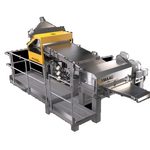
MAAG is introducing a new generation of its underwater strand pelletizing system, M²-USG, developed to deliver greater process stability, higher throughput and consistent pellet quality. The company has been developing underwater strand pelletizing technology for years, and the latest version of the system combines design changes with extended sensor integration. The purpose of these modifications is to increase production reliability and improve operational efficiency. According to the manufacturer, the system has been designed to provide very high availability, exceeding 99% OEE. Reduced downtime and lower production scrap levels are intended to translate directly into lower operating costs and improved plant profitability. The core element of the solution is the newly developed M²-USG cutting head, whose design is focused on simplifying operation and service tasks while reducing the risk of operator error. As MAAG states, many maintenance activities can be performed without tools, and cleaning time has been significantly shortened, allowing the line to be returned to operation more quickly.
In the pelletizing process, the polymer melt passes through the die plate, is then cooled and automatically guided into the pelletizer. Precise control of process parameters is critical to obtaining uniform, cylindrical pellets with a low level of fines. Incorrect settings can lead to strand adhesion, unstable cutting conditions and, consequently, production interruptions. The new M²-USG incorporates a series of targeted design optimizations intended to reduce such problems and support stable, efficient and more sustainable production.
A particularly important stage in pelletizing system operation is startup, when the polymer strands must be reliably transferred into the guide system. For this purpose, a new scraper has been developed that combines high operating speed with gentle strand handling. The strands are cut sequentially at the die plate and transferred to the guide section and the cutting head with a controlled time delay. This solution is intended to significantly reduce the risk of strand sticking, clogging and excessive material losses during startup, resulting in faster and more reliable achievement of stable operating conditions.
Smoother transition and higher process stability
An optimized water film on the startup table is intended to prevent turbulence and reduce the risk of strands sticking together. In addition, transport water is injected directly after cutting, which is intended to prevent potential blockages inside the cutting head, including when processing high-temperature polymers or materials that are more difficult to handle, such as polycarbonate. According to the manufacturer, the result is smoother machine operation, better process stability and higher system availability.
Larger cutting rotor and higher throughput
The new cutting head has a compact, optimized design and improved sound insulation. The rotor diameter has been increased from 162.5 mm to 200 mm, and the number of blades has risen from 30 to 36. This modification is intended to enable a significant increase in throughput while extending service life by 20%. A stable cutting gap, in turn, is intended to ensure high and consistent pellet quality and reduce service requirements and spare parts consumption, further lowering operating costs.
High throughput in a compact design
The M²-USG system is available in widths of 600, 900 and 1200 mm. In the 600 mm version, throughput is said to reach up to 13,000 kg/h when processing PET, while the 1200 mm variant reaches up to 24,000 kg/h. According to MAAG, this means a performance level clearly higher than in previous models. Greater production capacity is intended to make it possible to achieve the same output with smaller machines, which can reduce both capital expenditure and the installation footprint.
Integrated sensors in the system
Integrated sensors continuously monitor key parameters such as vibration, temperature, flow rate and pressure in order to keep production at the optimal operating point. Deviations are intended to be detected and reported immediately, also via remote monitoring, which helps reduce process instability and scrap. Strand flow is monitored by a camera system, and compressed air consumption is also tracked. The manufacturer also points to the use of energy-efficient reluctance motors, which are intended to contribute to lower energy consumption and improved environmental performance of the process.
According to MAAG, the new M²-USG sets a new benchmark in underwater pelletizing thanks to advanced engineering solutions, greater process stability and high pellet quality. From the user's perspective, the benefits are intended to include lower operating costs, higher throughput, improved efficiency and the integration of sensors supporting process reliability. The company thus emphasizes that even a proven pelletizing system can still be significantly optimized.