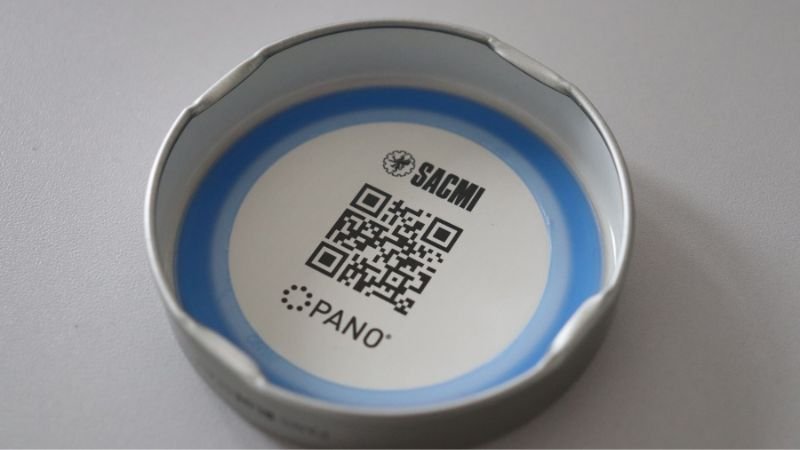
Pano Verschluss GmbH, a German manufacturer of metal closures, has been using Sacmi PMA technology for the production of PVC-free annular liners. The company has now installed five PMA machines and reports operational experience gained over several years. According to Pano, the technology has supported the production of PVC-free liners with results related to liner quality, packaging safety, cleanliness and process reliability. The system is described as compact, efficient and easy to manage, while already addressing regulatory developments concerning PVC-free gaskets. Thomas Stock, Managing Director of Pano Verschluss GmbH, explains that the company adopted the technology before PVC-free materials became a major regulatory issue, as part of a decision driven by industrial requirements.
"Pano installed PMA machines when PVC-free was not yet a major regulatory topic. This forward-thinking decision was based on specific industrial needs: we needed to ensure liner quality, packaging safety, process cleanliness and reliability. Now, that choice allows us to take PVC-free liner development to the next level with a technology that’s been tried and tested in production: a technology that offers major advantages in terms of process efficiency, product quality and safety."
Market experience in PVC-free closures
The experience gained with Sacmi PMA technology has allowed Pano to strengthen an already established market position. On the German market, where the use of PVC-free solutions has become widespread, the company says it has set the standard for this type of application.
"On the German market, where PVC-free use has become widespread, we’ve set the standard for this type of application, which continues to win over customers: a result built in the field, in close collaboration with our partners."
PVC-free annular liners create value across the supply chain, from the supplier of the PVC-free compound to the technology partner, Sacmi, which supplies the PMA machines, and to filling customers who verify performance in operating conditions and collect feedback from end consumers.
Compact machine concept and plant integration
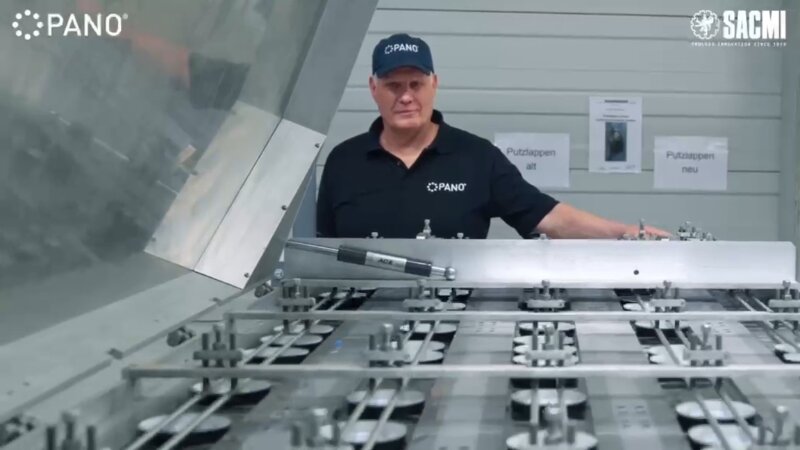
For the closure manufacturer, one of the first tangible advantages of the PMA system is its compact design. The reduced footprint facilitates integration into the plant layout and supports efficient use of available production space without compromising performance. According to Pano, this makes PMA technology suitable both for new installations and for integration into existing production layouts.
Dry, fully electric lining process
PMA technology uses a dry, fully electric lining process without curing ovens. The absence of curing ovens is associated with lower energy consumption, the elimination of contamination sources and a cleaner, healthier workplace. Pano identifies these factors as elements of food packaging quality and as important competitiveness factors.
Another feature highlighted by the company is operational simplicity. The machines require few operators and allow immediate process control. This simplifies daily workflows and enables workers to focus on tasks with higher added value. Pano also points to easier maintenance, with a tools and molds area that is tidy, clean and readily accessible. This layout reduces task times and supports continuity of production.
Quality control with Sacmi CVS
A stable process and advanced process controls are used to maintain liner quality. The Sacmi CVS vision system, integrated into the PMA machine, enables continuous and accurate inspection of output. According to Pano, easy adjustment and immediate process feedback support consistent and repeatable quality.
"In our experience, PMA technology has proven to be a mature and sound industrial solution, the best on today’s market. This farsighted decision now allows us to face future industry scenarios with just the right tools."